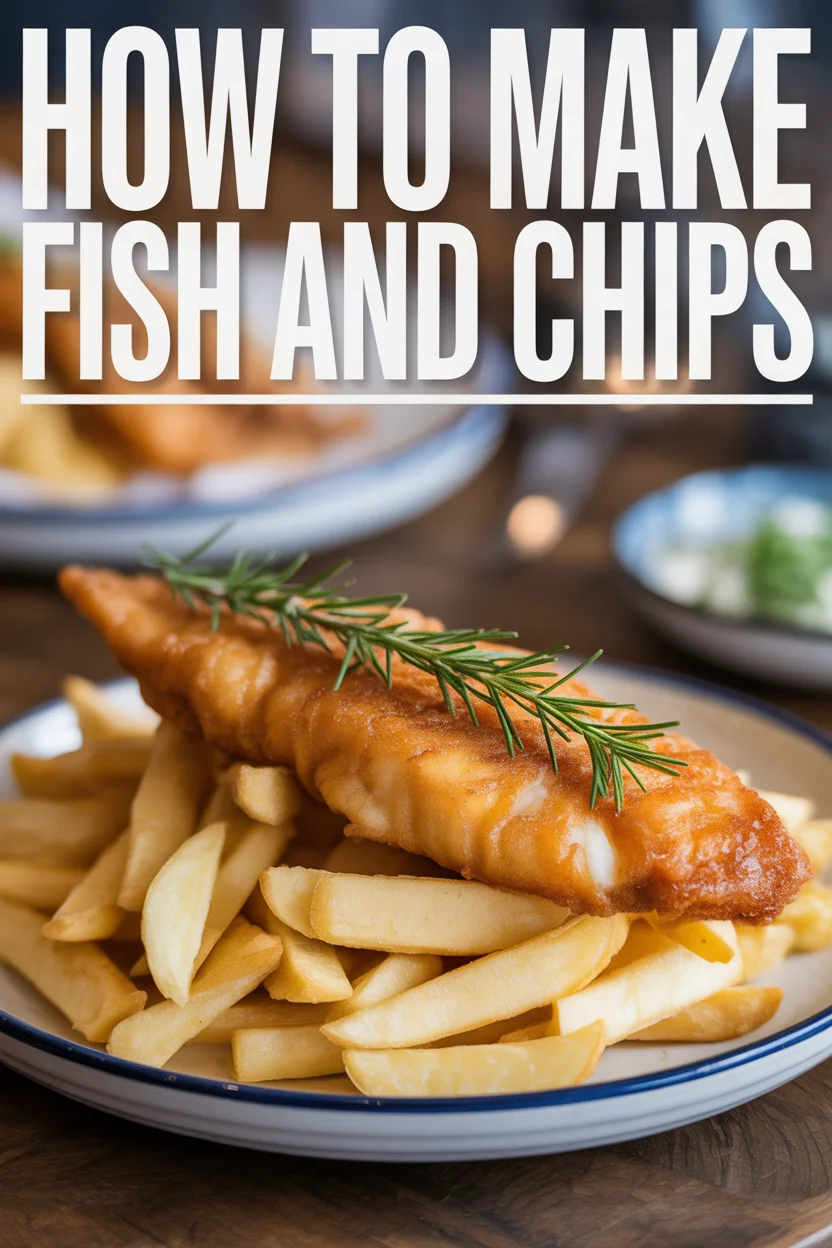

How To Make Fish and Chips at home sounds easy, I know, but it’s also that meal people always give up on after a few tries. Anyone else been halfway through making it, kitchen full of flour, and just… kind of want to quit? If you’ve ever eaten the real thing by the coast (oh, I can practically hear the seagulls), you know it’s got to be crispy, steamy, salty—hugely satisfying. I used to mess up the batter all the time. But don’t panic! There’s a knack to it and it’s not impossible. By the way, if you like a little variety, this recipe shares a mindset with my favorite salmon with roasted potatoes and broccoli meal, both hearty and simple!
PrintHow To Make Fish and Chips
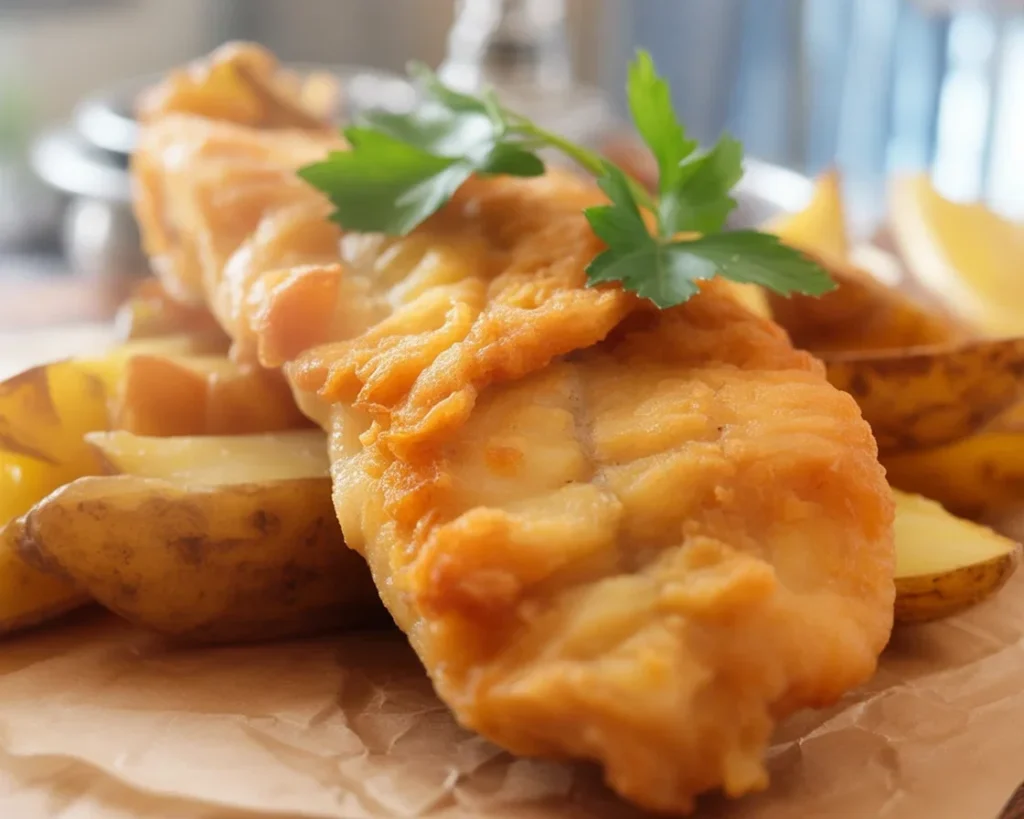
A classic British dish featuring crispy beer-battered fish served with golden, perfectly fried chips. This recipe delivers a crunchy exterior and tender, flaky fish every time.
- Prep Time: 40 minutes
- Cook Time: 20 minutes
- Total Time: 1 hour
- Yield: 4 servings 1x
- Category: Main Course
- Method: Deep Frying
- Cuisine: British
- Diet: Low Lactose
Ingredients
- 4 large white fish fillets (cod or haddock, about 6 oz each)
- 2 cups all-purpose flour (plus extra for dusting)
- 1 tsp baking powder
- 1 tsp salt
- 1/2 tsp black pepper
- 1 cup cold beer (lager or ale)
- 1 cup cold sparkling water
- 4 large russet potatoes (peeled and cut into thick chips)
- Vegetable oil (for deep frying)
- 1 lemon (cut into wedges, for serving)
- Tartar sauce (optional, for serving)
- Malt vinegar (optional, for serving)
Instructions
- Prepare the chips: Soak the cut potatoes in cold water for 30 minutes to remove excess starch. Drain and pat dry.
- First fry the chips: Heat oil to 300°F (150°C) and fry the chips for 4-5 minutes until soft but not browned. Remove and drain on paper towels.
- Make the batter: Whisk flour, baking powder, salt, and pepper in a bowl. Gradually whisk in beer and sparkling water until smooth. Keep cold.
- Fry the fish: Heat oil to 375°F (190°C). Dust fish fillets with flour, dip into batter, and carefully lower into hot oil. Fry for 4-5 minutes until golden and crispy. Drain on a wire rack.
- Second fry the chips: Increase oil heat to 375°F (190°C) and fry the chips again for 2-3 minutes until golden and crispy. Drain and season with salt.
- Serve immediately: Plate the fish and chips together with lemon wedges, tartar sauce, and malt vinegar on the side.
Notes
- For extra crispiness, keep the batter ice-cold before frying.
- Use a thermometer to maintain proper oil temperature.
- Double-frying the chips ensures a crispy exterior and fluffy interior.
- Replace beer with soda water for a non-alcoholic version.
Nutrition
- Serving Size: 1 fillet with chips
- Calories: 650
- Sugar: 2g
- Sodium: 450mg
- Fat: 28g
- Saturated Fat: 4g
- Unsaturated Fat: 18g
- Trans Fat: 0g
- Carbohydrates: 60g
- Fiber: 4g
- Protein: 35g
- Cholesterol: 80mg
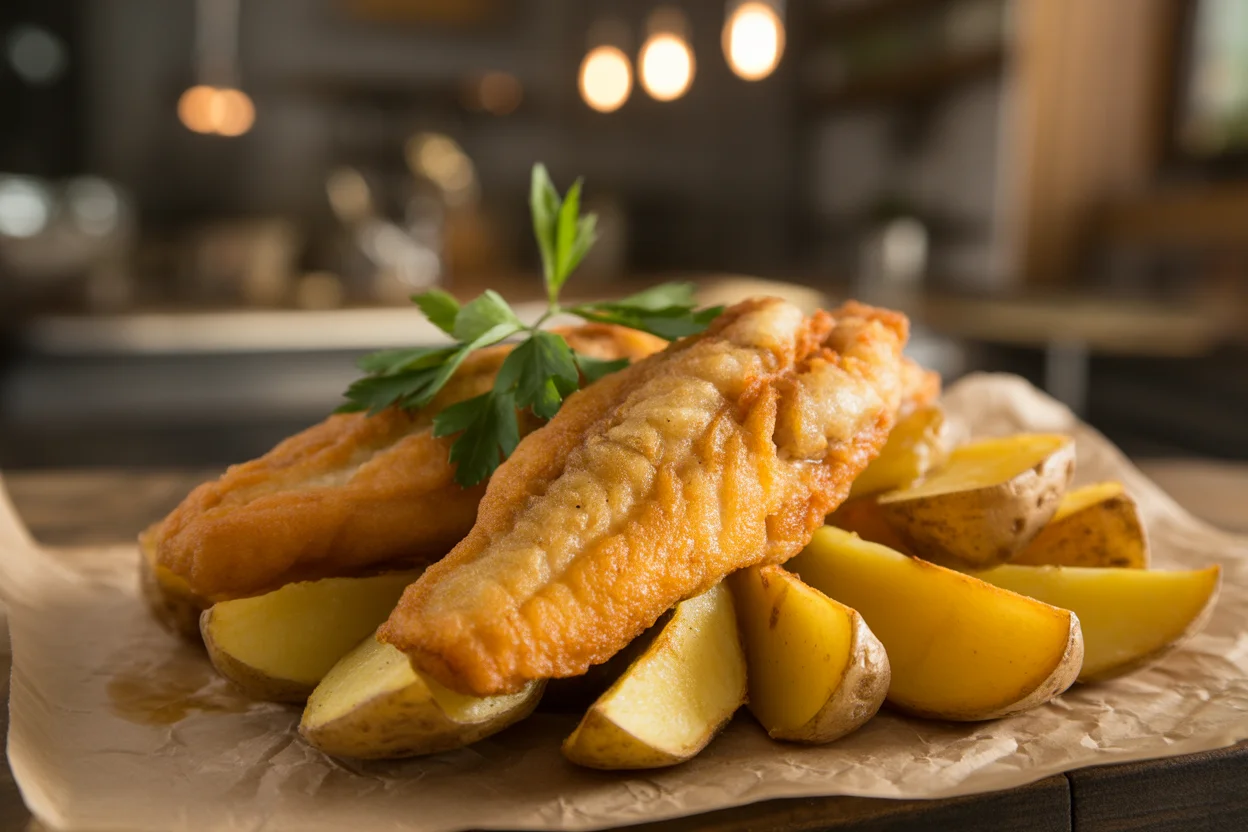
Traditional Fish & Chips
So, let’s get honest: “traditional” fish and chips is peasant food in disguise, but it sure tastes like a five-star restaurant if you get it right. You want big, flaky white fish (cod if you can snag it), and potatoes as simple as possible. None of those skinny fries. Thick, wonky hunks.
The real trick? It’s double-fried, so everything stays wicked crispy. First, cut your potatoes (not too thin), dunk ‘em in water to lose some starch. When you’re ready, dry them like a good pair of socks near the heater—seriously, moisture is the enemy of crisp. As for fish, keep it cold. I plunk mine in the fridge while I do the rest.
Once my old neighbor Frank said, “If the oil doesn’t hiss, don’t bother.” He’s right. Watch that temp. You’re aiming for a pale gold first fry, then crank it for the second go. The magic is real, friends! 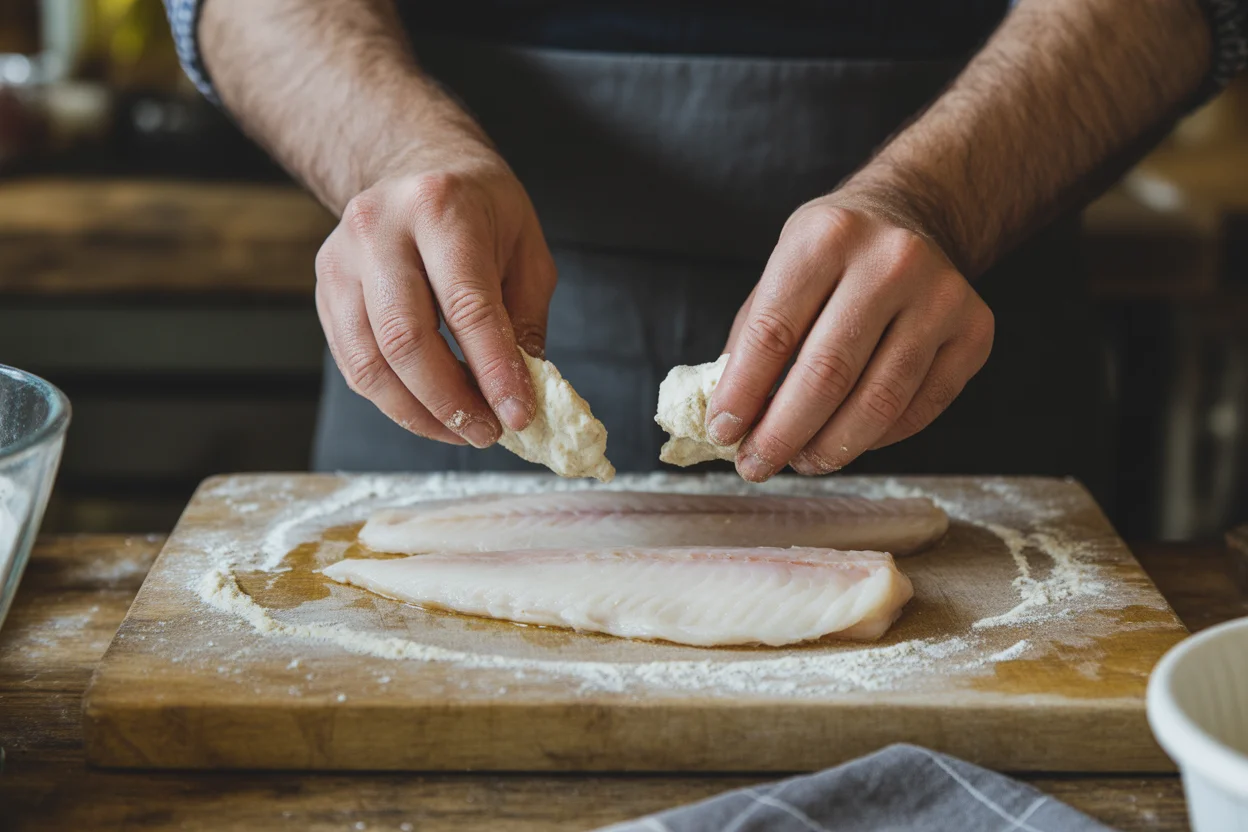
What Kind of Fish Works Best With This Batter?
You want something sturdy, but not weirdly chewy. Cod’s the classic, and haddock is a close second—both hold up, both flaky. I’ll be blunt: tilapia will totally wilt, and don’t even try salmon (it’s not the vibe for this).
Pollock is good if you can’t find the others, though it’s kinda the backup singer here. I’ve heard folks on the coast even use hake or whiting. Point is, your fish should be fresh—not frozen, unless you really can’t avoid it. Well, unless you like soggy batter, but I definitely don’t. (Oh, and always pat it dry before it hits the batter. Trust me, it matters!)
“I tried this with cod from my local market, and the texture was incredible—best I’d made, no joke. Even my picky kids wanted more!”
—Sam P., Maine
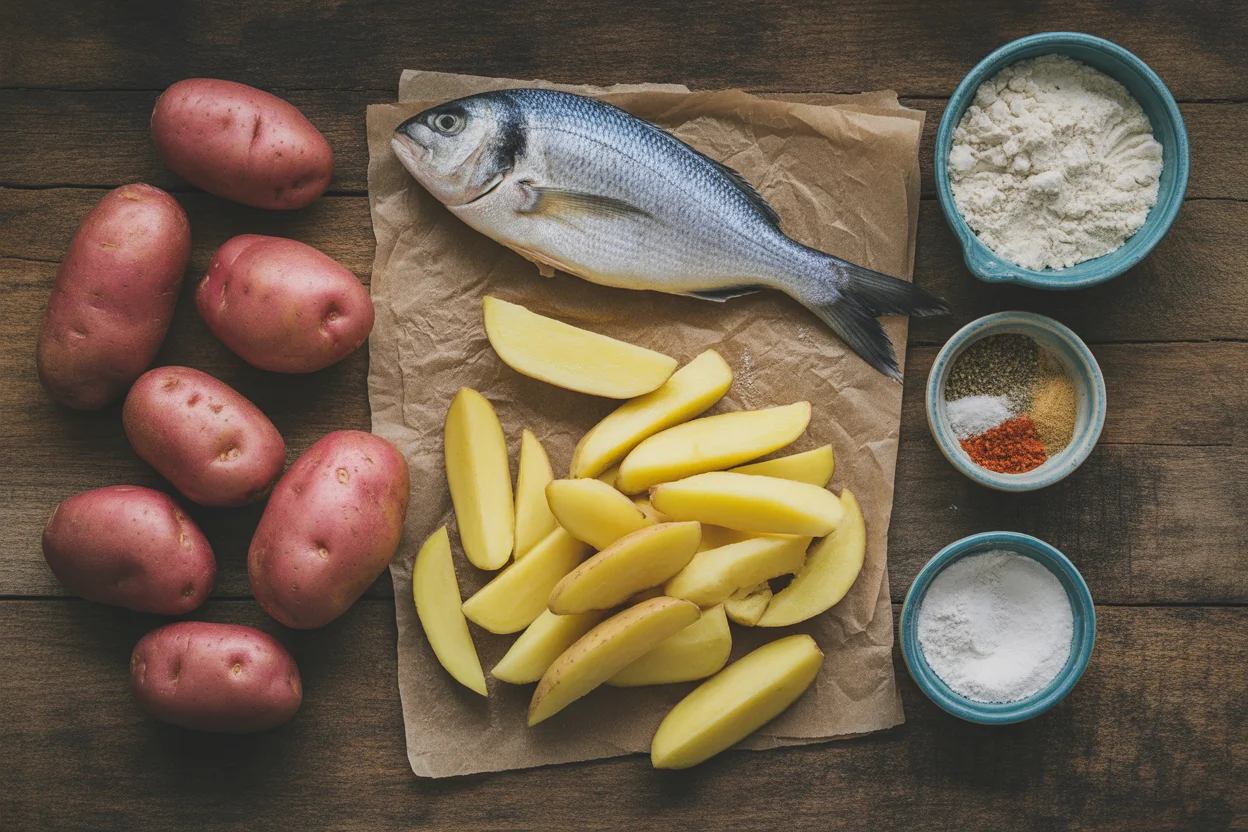
The batter is the secret to perfect Fish & Chips
Right, here’s the thing. The batter is the whole show. I’ll admit, for years my batter was gluey, or fell off, or just… weird. You want flour (plain all-purpose is fine), ice-cold fizzy water or a cold beer, baking powder, and a pinch of salt. That’s it.
Don’t whisk it to death! Lumps are fine. Seriously, I read this tip online and thought it was a joke, but lumpy batter traps air; air makes crispy. The colder the liquid, the crispier the shell. If your hands aren’t cold at this point, put the bowl in the fridge for ten minutes.
The first time I did this, the crunch could’ve woken up the whole neighborhood. Save some batter for dipping, because you’re gonna want seconds, believe me. 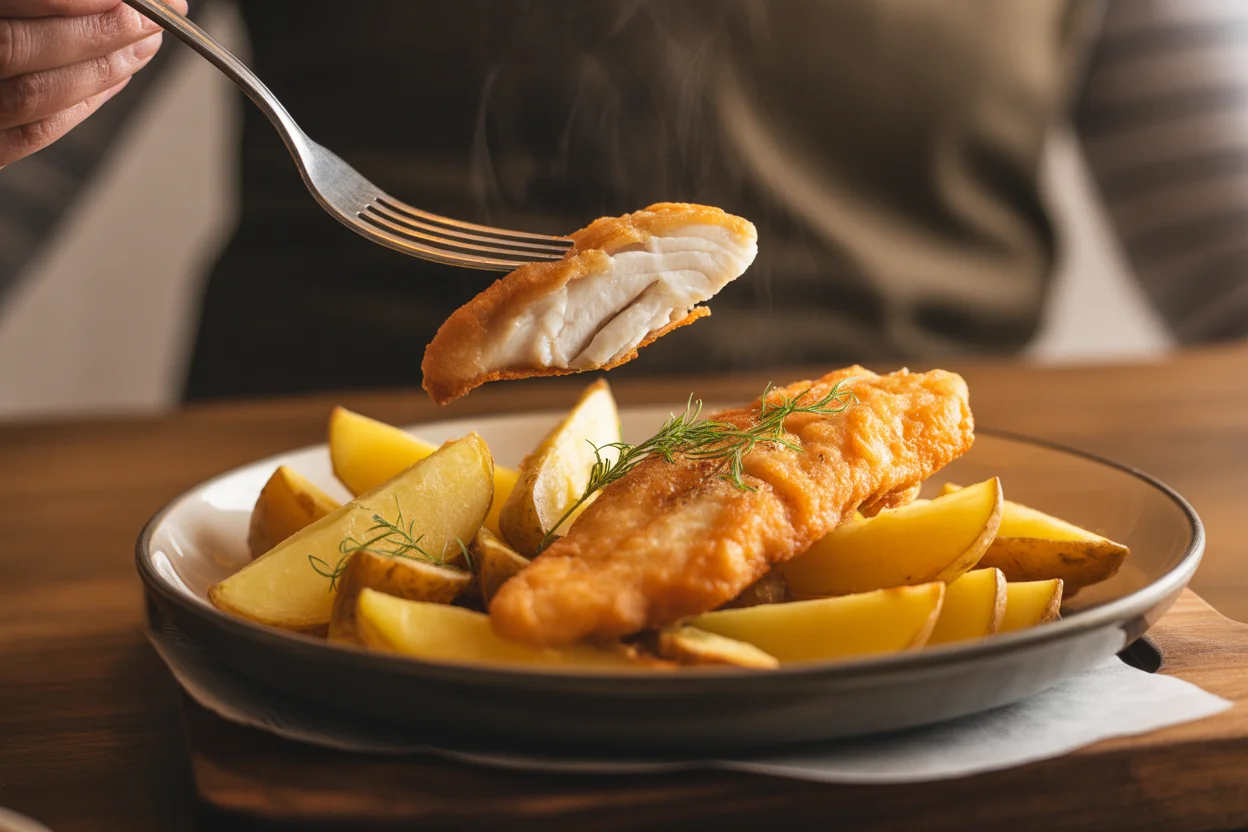
Fry the Fish and Chips in the Same Pot
So, here’s a bit of home-cook honesty: just use one pot. Your grandmother probably did. Yes, the oil gets a bit potato-y by the end, but that’s half the charm. I go for a deep, heavy-bottomed pot, enough oil to float the fish and chips around like they’re taking a bath.
Chips first—always. Get them soft on the inside, a bit golden on the outside (don’t worry, second fry coming up). Pull them, crank the heat, then dunk your battered fish. Watch ‘em sizzle. The batter puffs, turns golden in a flash. Smells fantastic. Bring the chips back for their final crispy fry. Everything lands on a rack, salt flies everywhere… man, I’m hungry just typing this.
Don’t crowd the pot. If the pieces don’t have room, you’ll end up with sog. And that’s just sad. Mix up some vinegar and toss it at the end if you’re feeling classic. Or malt vinegar! Now you’re talking.
Why Blanch the Chips Before Frying?
People always ask: “Do I really need to boil the chips first?” Mate, yes you do. Otherwise your fries are sad, raw inside. Blanching means dumping your cut potatoes in a pan of simmering water for a few minutes so they get soft but don’t go mushy.
This step makes their insides all fluffy, which is vital for proper chips (not limp, weirdly crunchy fries). Plus, they finish quicker in the oil—bonus. Drop them on a towel, pat ‘em dry, then let ‘em cool. The double-cook method’s what gives you that crispy-outside, fluffy-inside magic. If you skip this, you’ll know. Nobody wants chips that taste like boiled potatoes or burned on the edges.
Serving Suggestions
- Splash malt vinegar or lemon juice for a tangy kick.
- Serve with classic mushy peas (yes, trust me—it grows on you).
- Whip up some tartar sauce or, honestly, just use mayo.
- Add a wedge of lemon for a little British summertime drama.
Common Questions
Do I need a deep fryer for this?
Nope! I just use my big soup pot. As long as the oil is deep enough and hot, you’re golden.
Beer or sparkling water in the batter?
Either’s fine! Beer brings more flavor, sparkling water makes it lighter. Goes down to what you like most.
Can I use frozen fish?
You can, but thaw it really well and pat it bone-dry. Otherwise you’ll end up with a soft crust, and nobody wants that.
What kind of potatoes are best?
Russets are top-tier. You want floury, not waxy, for fluffy centers and crisp edges.
How do I keep leftovers crispy?
Oven at 400°F for a few minutes, single layer, rack if you’ve got one. Not the microwave… please, never the microwave.
Honestly, Just Try It. You’ll Surprise Yourself
So here we are. You’re probably a lot closer to making real, honest fish and chips than you think. Get your ingredients ready, don’t stress about perfection, and remember—the batter’s the boss. If you love trying different flavors, check out a new twist like this burrata with tomatoes and figs.
If you’re curious about other ideas or need more tips, I’d point you to this super detailed guide over at The Best Fish and Chips Recipe—loads of nuggets there (pun intended). Trying these old classics at home can turn a boring night into a proper feast. Honestly, you’ll nail it!